Why Children's Dental Care Matters From Day One
As parents, we understand that every decision we make shapes our children's future — and that includes their oral health. It might seem early to worry about brushing when your child is just a toddler, but the habits you establish now will influence their relationship with dental care for decades to come.
The reality is striking: tooth decay is the most common chronic disease in children, yet it's almost entirely preventable through good oral hygiene and proper nutrition. When children develop cavities, it doesn't just affect their teeth. It can impact their ability to eat comfortably, speak clearly, concentrate in school, and feel confident in social situations. Early childhood caries — cavities in baby teeth — can also affect the development of permanent teeth below.
But here's the encouraging part: if you start early, keep brushing fun, and make it part of your daily routine, your child will naturally grow up seeing dental care as normal and important, just like eating vegetables or sleeping well.
When to Start Brushing: The First Tooth Milestone
You might think tooth brushing begins when teeth arrive, but your child's oral care starts even before that. Begin cleaning your baby's gums within the first few days of birth using a soft, damp gauze pad or cloth. This removes milk residue and bacteria, and it familiarizes your baby with the sensation of mouth care.
Once the first tooth appears — usually between 4 and 12 months — it's time to introduce a proper toothbrush. Use a soft-bristled toothbrush designed for infants, and start with just water (no toothpaste yet). Gently brush all surfaces, front and back, for about 30 seconds. This isn't really about deep cleaning; it's about creating a positive association with the toothbrush.
At around 18 months to 2 years old, you can introduce fluoride toothpaste — but use only a smear, roughly the size of a grain of rice. This tiny amount provides fluoride protection without any risk if your child swallows it. Between 3 and 6 years old, increase it to a pea-sized amount. Young children can't rinse and spit effectively, so swallowing small amounts of toothpaste is normal.
Choosing the Right Toothbrush and Toothpaste by Age
Not all toothbrushes are created equal for children. As your child grows, their needs change, and so should their tools.
Ages 0–2: A soft-bristled infant toothbrush with a short handle and a small head designed to fit tiny mouths. The brush head should be no wider than the width of your child's mouth. Many parents prefer silicone finger brushes for this age, which they can control easily while cleaning.
Ages 2–6: A soft-bristled toddler toothbrush with a fun design or character that appeals to your child. Let them choose between two or three options. Kids are more excited to brush if they've "chosen" their brush. Look for ones with a fun handle and a slightly larger head than infant brushes, but still appropriately sized.
Ages 6+: An age-appropriate children's toothbrush (still softer than adult brushes), or an electric toothbrush designed for kids. Electric brushes can be especially motivating for this age group, as many come with timers and fun lights.
For toothpaste, always choose a fluoride variety specifically formulated for children. Toothpaste made for kids typically has a milder flavor that's more appealing. Look for brands with the ADA (American Dental Association) seal of approval. Avoid whitening toothpastes for young children — they're not necessary, and kids don't need the abrasive formulas.
Making Brushing Fun: Games, Songs, and Rewards
The biggest challenge most parents face isn't understanding why brushing matters — it's actually getting their child excited to do it. Here are proven strategies that work:
Sing a two-minute song: Set a toothbrushing song on repeat. Whether it's a silly custom song, a pop tune your child loves, or a free toothbrush song you find online, music makes time pass quickly and signals when brushing is done. "Twinkle, Twinkle Little Star" sung twice is roughly two minutes — just enough time.
Make it a game: Pretend you're brushing the teeth of their stuffed animals. Let them "help" you brush the bear's teeth, then offer their own teeth for brushing. Tell them you're "searching for sugar bugs" and brushing them away. Kids are imaginative — tap into that.
Use a timer: Many children are motivated by visual timers. A colorful sand timer or a timer app that counts down from two minutes gives your child a goal. "When the timer runs out, we're done!" provides structure and predictability.
Create a reward chart: A simple sticker chart or checklist where children place a sticker after brushing can be surprisingly motivating. After 10 stickers, they earn a small reward (not candy!) — an extra bedtime story, a trip to the park, or a small toy. This teaches them that consistent habits lead to rewards.
Let them lead sometimes: Every few days, let your child brush their own teeth first (they won't do a thorough job, but that's okay), then you follow up with a proper brushing. Autonomy feels empowering to kids.
Use interactive toothbrushes: Electric toothbrushes for kids often have lights, sounds, or apps that make brushing feel more like play. Some connect to games on your phone, adding a gaming element.
The Two-Minute Rule and Proper Technique for Kids
Most adults brush for only 45 seconds on average, but proper brushing takes at least two full minutes. Here's the technique you should teach your child, starting as early as they can understand:
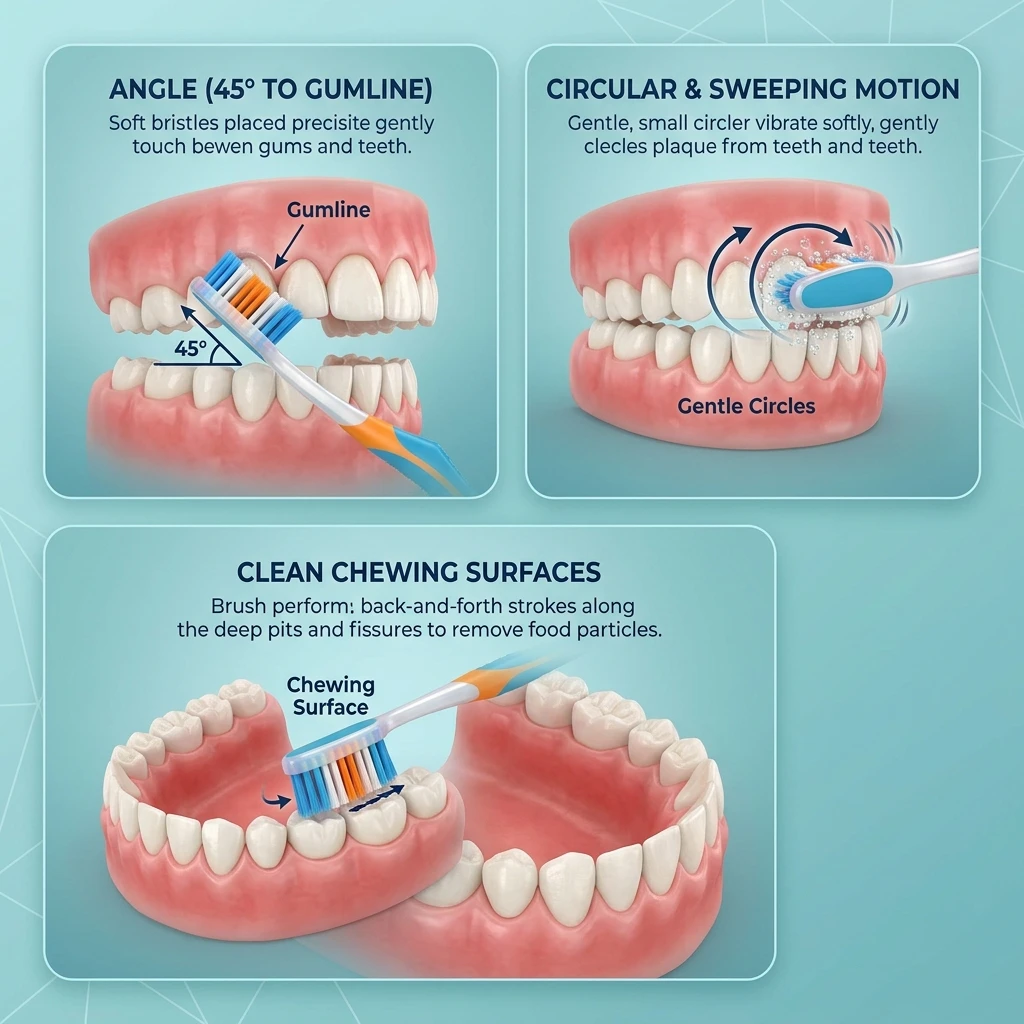
The method: Use gentle, circular motions rather than aggressive back-and-forth sawing. Divide the mouth into sections: outer surfaces of top teeth, inner surfaces of top teeth, chewing surfaces of top teeth, then repeat for the bottom. Spend about 30 seconds per section. Don't forget the inner back molars — cavities love to hide there.
For your role: Until about age 7 or 8, your child cannot effectively brush all surfaces of their teeth, no matter how willing they are. So your job is to supervise, follow up with a proper brushing, and model good technique. Let them see you brushing thoroughly.
Gentle pressure: Teach them to brush with the tip of the brush, not the side. The bristles should barely touch the gums, not press hard. Many kids brush too aggressively because they think harder means cleaner — it doesn't, and it can damage gums.
When to Let Children Brush on Their Own
The transition to independent brushing is gradual. Most children lack the fine motor skills and motivation to brush properly until around age 8 or 9. Here's a timeline:
Ages 2–5: You do most of the brushing. Your child may hold the toothbrush and make motions, but they're not yet capable of cleaning effectively. After they finish, take the brush and do a thorough job.
Ages 5–8: Your child can do more of the brushing, but you still need to supervise and follow up. Many parents use this phase as a "practice" session, then do a proper brushing afterward. It builds their motor skills and independence.
Ages 8+: Most children can brush more effectively on their own, but they still benefit from occasional supervision. Check their work sometimes. You might say, "Show me your teeth" after brushing and do a quick inspection. Kids this age are more capable but often still need reminders.
Even teenagers can be forgetful. The goal isn't perfection; it's establishing the habit so that brushing becomes automatic, like getting dressed.
Common Mistakes Parents Make
Understanding what NOT to do is just as important as knowing what to do. Here are pitfalls to avoid:
Delaying the first tooth: Some parents think baby teeth don't matter because they're temporary. False. Baby teeth hold space for permanent teeth, guide their eruption, and affect chewing and speech. Neglecting them is costly.
Using too much toothpaste: Too much fluoride in young children can cause dental fluorosis (white spots on teeth). Stick to the rice grain for children under 3, pea-sized for ages 3–6.
Giving up too easily: "My child refuses to brush" is something we hear often. But you wouldn't let them skip bathing because they resist. Brushing is non-negotiable. It takes patience, but consistency creates habits. If one approach isn't working, try another.
Making it punitive: Never use brushing as a punishment or force it aggressively when children are upset. This creates negative associations. If your child is resistant, try a different time, add music, or use a preferred toothbrush. Positivity wins.
Neglecting their diet: Brushing alone doesn't prevent cavities if your child is constantly sipping sugary juice or eating sticky snacks. Limit sugar, encourage water, and rinse mouth with water after sugary foods.
Skipping professional cleanings: Many parents think they can skip dental visits if their child brushes well. Professional cleanings remove tartar that brushing can't address, and dentists catch early problems before they become expensive. Visit every six months from age one.
First Dental Visit: When and What to Expect
The American Academy of Pediatric Dentistry recommends that children see a dentist by their first birthday or within six months of their first tooth's appearance. This early visit isn't about cleaning; it's about establishing a relationship and catching issues early.
What happens at this visit? Your dentist will examine the baby's teeth and gums, check for decay or abnormalities, review feeding habits, and discuss home care with you. It's a short appointment — your baby may not even sit in the chair yet. The goal is comfort and familiarity.
Regular visits: After the first visit, bring your child every six months for cleaning and check-ups. Some children may need more frequent visits if they're at high risk for cavities.
Preparing your child: Before the first visit, read books about going to the dentist. Keep your language positive. Never say things like "Don't worry, it won't hurt" (because that suggests it might). Instead: "The dentist will count your teeth and keep them healthy."
First fluoride treatment: Around age 3, dentists often apply professional fluoride to strengthen enamel. This is a quick, painless process that provides extra protection against decay.
Diet and Dental Health for Children
Brushing removes bacteria and plaque, but diet determines whether cavity-causing acids are produced in the first place. What your child eats and drinks matters enormously.
Limit sugary drinks: Fruit juice, soda, sports drinks, and flavored milks are cavity culprits. If your child drinks these, use a straw to bypass the front teeth, and have them rinse with water immediately after. Better yet, offer water or milk instead.
Watch snacking patterns: Frequent snacking is worse than sugary treats eaten at once. Each time your child eats sugar, their mouth becomes acidic for 20 minutes. Sticky snacks like dried fruit, granola bars, and chips cling to teeth longer. Offer snacks at set times, then brush or rinse afterward.
Protect baby teeth from bottle rot: If your toddler falls asleep with a bottle of juice or formula, bacteria feast overnight on the sugars while saliva production drops. Use bottles only for meals, never as a pacifier, and never with anything but water before bed.
Encourage calcium-rich foods: Milk, cheese, and yogurt strengthen developing teeth. These also neutralize acids in the mouth.
Rinse after meals: Teach children to swish water after eating, especially after sugary foods. This simple habit reduces cavity risk significantly.
Building a Lifelong Habit
The ultimate goal isn't just to prevent cavities in childhood — it's to raise an adult who sees oral hygiene as a natural, non-negotiable part of their routine. That happens when brushing is:
- Consistent: Same time, same place every day. Morning after breakfast and night before bed become automatic.
- Positive: Associated with fun songs, games, or rewards rather than punishment or stress.
- Modeled: Kids brush better when they see you brushing with attention and care. Make it visible.
- Age-appropriate: Your methods change as they grow. What works for a 2-year-old won't work for a 7-year-old.
- Supported by professionals: Regular dental visits reinforce that oral health is important and trustworthy.