What Are Clear Aligners and How Do They Work?
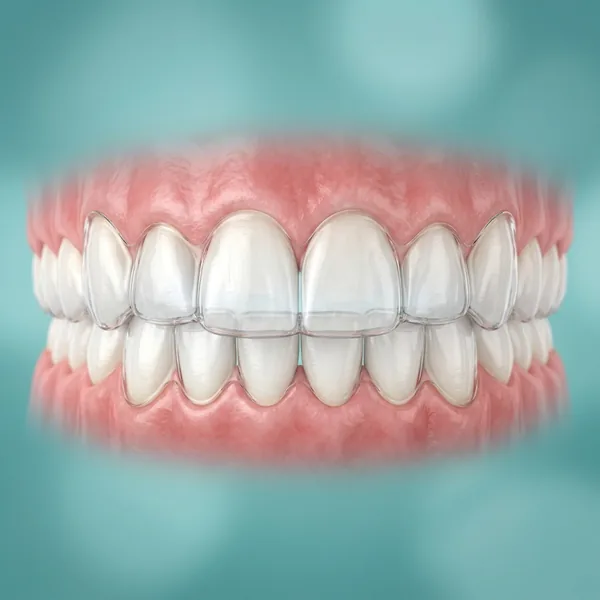
Clear aligners are a modern orthodontic treatment that straightens teeth using a series of custom-made, removable, nearly invisible plastic trays. Unlike traditional metal braces, which use brackets and wires to move teeth, clear aligners use gentle, controlled pressure from precisely fabricated trays that fit snugly over your teeth.
The most well-known brand is Invisalign, though several other systems — such as ClearCorrect, SmileDirect, and domestic alternatives — work on similar principles. At Krishna Dental, we use clinically validated clear aligner systems that combine digital scanning technology with precision-manufactured trays for predictable results.
The treatment begins with a 3D digital scan of your teeth. Specialised software then maps out the precise tooth movements required from your current position to your desired final result. From this digital treatment plan, a series of custom trays are manufactured — each slightly different, representing one small step in the journey. You wear each tray for 1–2 weeks before moving to the next, gradually shifting your teeth into alignment.
How many hours must you wear aligners?
Clear aligners must be worn 20 to 22 hours per day for treatment to progress on schedule. They are removed only for eating, drinking (anything except water), and brushing. Wearing them for fewer hours each day prolongs treatment time and compromises results.
What Conditions Can Clear Aligners Treat?
Clear aligner technology has advanced enormously since Invisalign launched in 1999. Today, aligners can treat a wide range of orthodontic conditions that once required braces exclusively.
Crowding — when teeth overlap or are rotated due to insufficient space — is one of the most common reasons people seek orthodontic treatment. Mild to moderate crowding responds very well to aligner therapy. Severe crowding with significant tooth rotation may still be better addressed with braces.
Spacing issues — gaps between teeth, whether from a missing tooth, small teeth, or natural spacing — can be closed effectively with aligners. This includes diastemas (the gap between front teeth that many people find cosmetically bothersome).
Bite problems including overbite (upper teeth protrude too far over lower teeth), underbite (lower teeth sit in front of upper teeth), crossbite (upper and lower teeth don't align side-to-side), and open bite (front teeth don't fully close) can all be addressed with clear aligners, though complex bite cases may require a combination of aligners and other orthodontic appliances.
Relapse after previous orthodontic treatment is very common. Teeth that were once straight gradually shift if retainers aren't worn consistently. Aligners are excellent for correcting mild to moderate relapse and are often faster in these cases since the teeth are simply being guided back to their previous positions.
The Clear Aligner Treatment Process: Step by Step
Digital Smile Assessment
Your dentist takes a 3D intraoral scan (no messy impressions), photographs, and bite records. This data feeds into treatment planning software that shows a virtual simulation of your expected result.
Treatment Plan Review
You review the digital treatment plan — a video showing how your teeth move from start to finish — and approve it before any trays are made. This transparency is one of the most appreciated aspects of clear aligner treatment.
Aligner Fitting
Once your custom trays arrive, your dentist fits the first set and may bond small tooth-coloured "attachments" to certain teeth. These attachments give the aligners additional grip to perform complex movements.
Progress Check-ins
You visit the clinic every 6–8 weeks for progress checks. Your dentist ensures teeth are tracking as planned and provides the next batch of trays. Between visits, you change trays at home every 1–2 weeks.
Refinements (if needed)
Sometimes additional trays are needed to achieve the final result perfectly. Refinement aligners are common and are included in most comprehensive treatment packages.
Retainers
After treatment, retainers are essential to maintain your new smile. Without a retainer, teeth naturally shift back. Most patients wear a removable retainer nightly for life.
Clear Aligners vs Metal Braces: Key Differences
| Feature | Clear Aligners | Metal Braces |
|---|---|---|
| Visibility | Nearly invisible | Clearly visible |
| Removability | Removable for eating & brushing | Fixed — cannot be removed |
| Dietary restrictions | None (remove before eating) | Avoid hard, sticky, crunchy foods |
| Oral hygiene | Easy — brush & floss normally | More difficult around brackets |
| Comfort | Smooth plastic, no wires | Brackets and wires can irritate |
| Office visits | Every 6–8 weeks | Every 4–6 weeks for adjustments |
| Complex bite cases | Some limitations | Handles most complex cases |
| Cost | Comparable or slightly higher | Generally slightly lower |
Who Is a Good Candidate for Clear Aligners?
Clear aligners work best for adults and older teenagers who are motivated, disciplined, and can commit to wearing the trays for the required 20–22 hours daily. The removability that makes aligners so appealing is also a responsibility — patients who frequently forget to wear their trays or remove them for extended periods will not see good results.
From a clinical standpoint, mild to moderate crowding, spacing, and bite issues are ideal for clear aligner treatment. Patients with severe skeletal discrepancies (jaw misalignment that goes beyond just teeth) may need a combination of orthodontic treatment and orthognathic surgery, where braces are typically used.
Patients with gum disease or significant dental decay must have these treated before starting aligner therapy. Active gum disease and moving teeth don't mix — healthy gum tissue is essential for tooth movement.
Caring for Your Aligners: Daily Routine Tips
Clean aligners twice daily — rinse them every time you remove them and clean them with a soft toothbrush and clear, unscented soap or the aligner cleaning solution recommended by your dentist. Never use toothpaste, which is abrasive and scratches the plastic, making it cloudy and more visible.
Store them properly when not in your mouth — always in the case provided. Lost or broken aligners should be reported to your dentist immediately; wearing the previous or next tray while a replacement is made is usually recommended.
Brush and floss before reinserting — inserting aligners over unbrushed teeth traps bacteria and food particles against your enamel, dramatically increasing the risk of cavities. Maintain meticulous oral hygiene throughout treatment.
Avoid coloured drinks while wearing aligners — coffee, tea, turmeric drinks, and juices will stain the plastic. Even if the staining is light, it makes aligners more visible and defeats their aesthetic purpose.
Related Treatments & Resources
Considering orthodontic treatment? Explore these related resources: