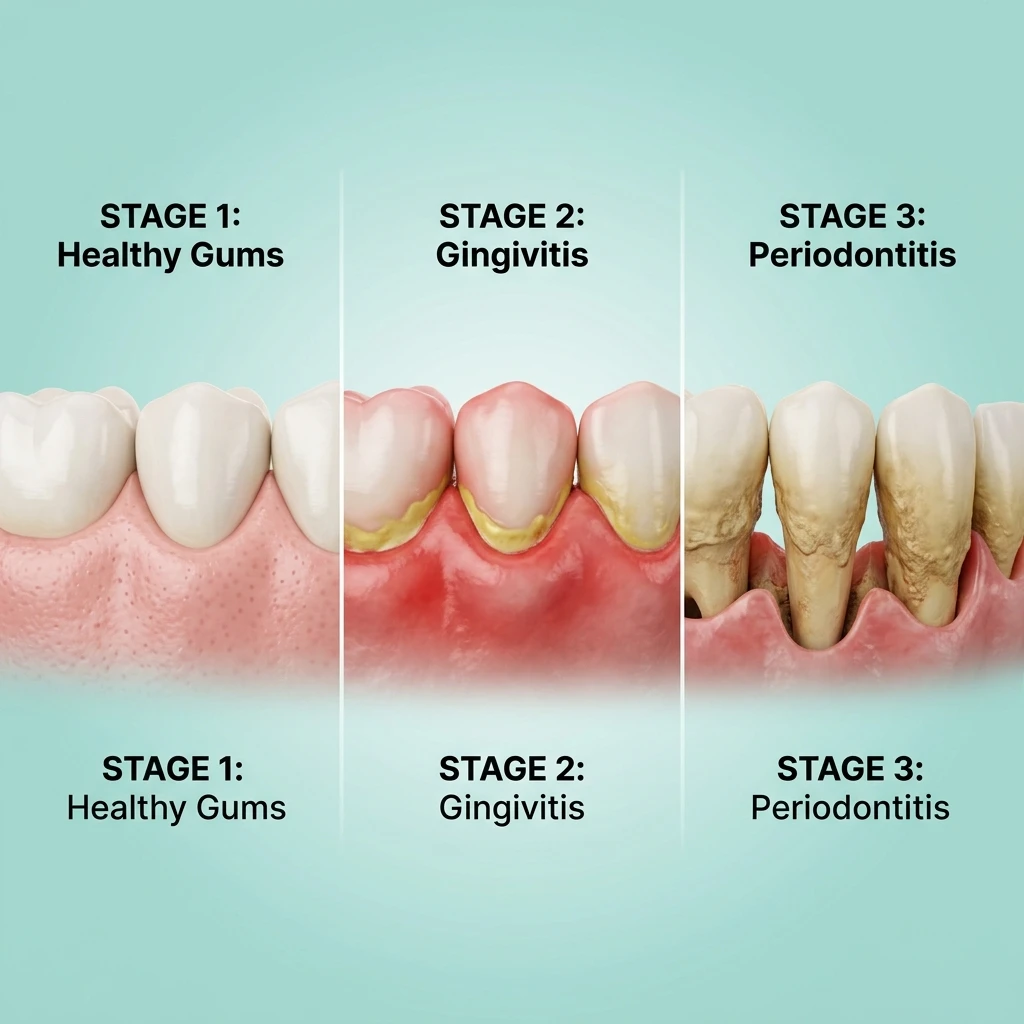
What is Gum Disease?
Gum disease, also called periodontal disease, is an infection of the gums and bone supporting your teeth. It's one of the most common dental problems, affecting millions of people worldwide. What makes it dangerous is that it often develops without obvious symptoms — which is why it's called "the silent threat."
Gum disease starts when plaque — a sticky film of bacteria — builds up on your teeth. If not removed by daily brushing and flossing, plaque hardens into tartar (calculus), which can only be removed by a professional cleaning. The bacteria in plaque and tartar release toxins that irritate your gums, triggering the infection.
If you're in Gudivada and notice any signs of gum disease, schedule an appointment with Krishna Dental immediately. Early intervention can prevent the disease from progressing and causing irreversible damage.
Early Signs Most People Miss
Many people don't realize they have gum disease until it's advanced. Here are the subtle early signs to watch for:
- Bleeding when brushing or flossing: Healthy gums don't bleed. Any bleeding is a sign of inflammation and bacterial infection.
- Swollen or tender gums: Your gums may feel puffy or tender when you touch them or chew.
- Receding gums: Your teeth may appear longer as your gumline moves downward, exposing the tooth root.
- Persistent bad breath: The bacteria in infected gums produce foul-smelling compounds.
- Changes in bite: Your teeth may shift or your bite may feel different.
- Loose or shifting teeth: As the bone supporting your teeth weakens, they can become loose.
- Pus between teeth and gums: This indicates an active infection.
If you notice any of these signs, don't ignore them. Contact Krishna Dental on Eluru Road in Gudivada for an evaluation. The earlier gum disease is diagnosed, the easier it is to treat.
The Stages of Gum Disease
Understanding the stages of gum disease helps you recognize how serious your condition might be:
Stage 1: Gingivitis
Gingivitis is the earliest and most treatable stage of gum disease. At this point, only the gum tissue is infected — the underlying bone is not yet affected.
- Symptoms: Bleeding gums, redness, swelling, and possibly bad breath.
- Reversibility: Gingivitis is completely reversible with professional cleaning and improved oral hygiene.
- Timeline: Can develop in days to weeks if plaque accumulates.
Stage 2: Mild Periodontitis
If gingivitis is not treated, it progresses to mild periodontitis. Now the bone supporting your teeth is starting to be affected.
- Symptoms: Deeper pockets around the teeth, bleeding, swelling, and possible bone loss visible on X-rays.
- Reversibility: Not fully reversible, but can be stabilized with treatment.
Stage 3: Moderate Periodontitis
The infection is more established, and more bone has been lost. Symptoms become more apparent.
- Symptoms: Deeper pockets (4–6mm), significant bone loss, possible tooth mobility, pus discharge, and severe bad breath.
- Reversibility: Cannot be reversed, but aggressive treatment can halt progression.
Stage 4: Advanced Periodontitis
This is the most severe form of gum disease. Significant bone loss has occurred, and teeth are at risk of being lost.
- Symptoms: Very deep pockets (>6mm), extensive bone loss, loose teeth, possible tooth loss, severe bad breath, and pain.
- Reversibility: Cannot be reversed. The goal is to halt progression and save remaining teeth.
At Krishna Dental in Gudivada, we use advanced diagnostic tools to determine which stage of gum disease you have and recommend appropriate treatment.
Risk Factors for Gum Disease
While poor oral hygiene is the primary cause, several other factors increase your risk:
Smoking
Smokers are significantly more likely to develop gum disease. Smoking weakens the immune system's ability to fight infection and slows healing.
Diabetes
People with diabetes are more susceptible to gum disease, and gum disease can make blood sugar harder to control — creating a vicious cycle.
Genetics
Some people are genetically predisposed to gum disease. If your parents had gum disease, you're at higher risk.
Stress
Chronic stress weakens the immune system, making it harder to fight infection, including gum disease.
Poor Nutrition
A diet lacking essential nutrients, especially vitamin C and calcium, increases susceptibility to gum disease.
Hormonal Changes
Pregnant women, women using hormonal contraceptives, and women approaching menopause are at higher risk due to hormonal fluctuations.
Certain Medications
Some medications reduce saliva flow, which increases cavity and gum disease risk.
Poor Oral Hygiene
The primary risk factor. Inadequate brushing, flossing, and professional cleanings allow plaque to accumulate.
If you have any of these risk factors, be extra vigilant about your oral health and schedule regular check-ups at Krishna Dental in Gudivada.
The Systemic Health Connection: Recent research shows that untreated gum disease is linked to serious conditions including heart disease, stroke, diabetes complications, and respiratory infections. Your oral health isn't isolated — it affects your whole body.
The Surprising Link Between Gum Disease and Systemic Health
Many people don't realize that gum disease can affect far more than just your mouth. The bacteria and inflammation from gum disease can enter your bloodstream and affect other parts of your body.
Heart Disease
Studies show a strong link between gum disease and heart disease. The bacteria from infected gums can travel through your bloodstream, causing inflammation in blood vessels and increasing your risk of heart attack or stroke.
Diabetes
The relationship between gum disease and diabetes is bidirectional. Uncontrolled diabetes increases infection risk, and gum disease makes blood sugar management harder.
Respiratory Infections
Bacteria from infected gums can be aspirated into your lungs, increasing the risk of pneumonia and other respiratory infections.
Pregnancy Complications
Pregnant women with gum disease have a higher risk of preterm birth and low birth weight babies.
Cognitive Decline
Some research suggests a link between chronic gum disease and cognitive decline in older adults.
This is why regular dental check-ups are so important — they're part of your overall health maintenance, not just cosmetic care.
Diagnosis and Assessment
At Krishna Dental, diagnosing gum disease involves several steps:
Visual Examination
Your dentist examines your gums for redness, swelling, bleeding, and recession.
Probing
Using a special probe, your dentist measures the depth of the pockets around each tooth. Healthy pockets are 1–3mm deep; deeper pockets indicate disease.
X-rays
Digital X-rays reveal bone loss, which isn't visible to the naked eye.
Assessment of Risk Factors
Your dentist asks about smoking, diabetes, family history, and other risk factors.
Based on this assessment, your dentist determines the stage of gum disease and recommends appropriate treatment.
Treatment Options at Each Stage
The good news: gum disease is highly treatable when caught early. Treatment depends on the stage:
Gingivitis Treatment
- Professional cleaning: Removal of plaque and tartar above the gumline.
- Improved home care: Daily brushing and flossing as directed.
- Expected result: Complete reversal within weeks.
Mild to Moderate Periodontitis Treatment
- Scaling and root planing: Deep cleaning that removes plaque and tartar from below the gumline and smooths the tooth root to prevent bacteria from clinging.
- Antibiotic therapy: Oral antibiotics or antimicrobial rinses may be prescribed.
- Maintenance: More frequent professional cleanings (every 3 months instead of 6).
- Expected result: Disease progression halted, some improvement possible.
Advanced Periodontitis Treatment
- Surgical intervention: Gum surgery or bone grafting may be necessary to regenerate lost bone.
- Tooth extraction: Severely loose teeth may need to be removed.
- Implants: After successful treatment, dental implants can replace lost teeth.
- Intensive maintenance: Lifelong professional cleanings and meticulous home care.
At Krishna Dental in Gudivada, we use the latest techniques including laser therapy and regenerative procedures to treat gum disease effectively.
Can Gum Disease Be Reversed?
The answer depends on the stage:
- Gingivitis: Yes, completely reversible with professional cleaning and improved home care.
- Mild periodontitis: Cannot be fully reversed, but can be stabilized and improved with aggressive treatment.
- Moderate to advanced periodontitis: Cannot be reversed, but progression can be halted and remaining teeth can be saved.
This underscores the importance of catching gum disease early. Gingivitis is easily fixed, but periodontitis requires ongoing management. Prevention is far easier than treatment.
Prevention Strategies That Work
The best way to deal with gum disease is to prevent it. Here are proven strategies:
Daily Brushing
- Brush twice daily for at least two minutes.
- Use a soft-bristled toothbrush at a 45-degree angle to the gum line.
- Use fluoride toothpaste.
- Consider an electric toothbrush for more effective plaque removal.
Daily Flossing
- Floss at least once daily, preferably at night.
- Don't skip the gumline — this is where gum disease starts.
- If traditional floss is difficult, try water flossers or dental picks.
Professional Cleanings
- Visit your dentist every 6 months (or more frequently if you have risk factors).
- Professional cleanings remove tartar that you can't remove at home.
Lifestyle Changes
- Quit smoking: This is one of the best things you can do for your gums.
- Manage stress: Chronic stress weakens immunity.
- Eat a healthy diet: Focus on foods rich in vitamins C and D, and calcium.
- Control diabetes: Keep your blood sugar in target range.
Antimicrobial Rinse
- Use an antimicrobial mouthwash to reduce bacteria count.
- This is especially useful for people with gum disease risk factors.
At Krishna Dental in Gudivada, we educate our patients on these prevention strategies and monitor them closely to catch any early signs of disease.
The Importance of Regular Professional Cleanings
You might brush and floss perfectly, but you still can't remove all the plaque and tartar that builds up. This is why professional cleanings are essential.
During a professional cleaning at Krishna Dental, we remove plaque and tartar from areas you can't reach at home, including below the gumline. We also apply fluoride to strengthen your enamel and assess your gum health.
If you have gum disease risk factors or a history of gum disease, you may need cleanings more frequently than the standard every 6 months. Your dentist in Gudivada will recommend the right frequency for you.