Introduction: Living with Missing Teeth and the Solution
A missing tooth or multiple missing teeth can profoundly impact your life. Beyond the obvious aesthetic concerns, missing teeth affect how you speak, eat, and smile with confidence. They can change the shape of your face, prematurely aging your appearance. Perhaps even more importantly, they can affect your remaining teeth and jawbone in ways that create long-term problems.
For decades, the primary options for replacing missing teeth were dentures and dental bridges. While these solutions have their place, they come with limitations: dentures require daily removal and maintenance, can be uncomfortable, and gradually wear down the underlying bone. Bridges require grinding down healthy adjacent teeth for support. Both options are improvements over living with missing teeth, but neither replicates the functionality and permanence of your natural teeth.
Dental implants represent a revolutionary solution. They're the closest thing modern dentistry can offer to replacing a natural tooth. An implant restores not just the visible crown of your tooth, but also provides the root structure that preserves your jawbone and maintains your facial structure. For millions of people worldwide, implants have transformed their oral health and quality of life.
What Is a Dental Implant: Understanding the Components
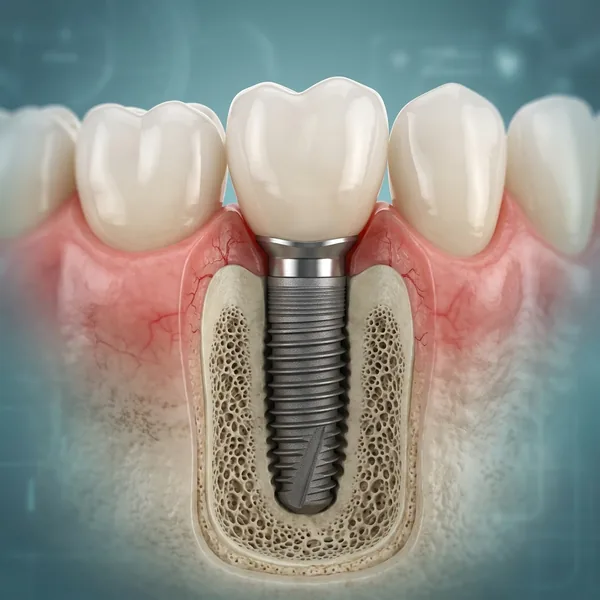
A dental implant is a prosthetic tooth root made of biocompatible titanium that is surgically placed into your jawbone. But the implant itself is just one part of a complete restoration. Understanding the components helps you appreciate the sophistication of implant technology.
The dental implant consists of three main parts: the implant body, the abutment, and the crown. The implant body (or fixture) is a small titanium screw that's surgically embedded into your jawbone, where it functions like a tooth root. Over several months, the bone grows around the implant in a process called osseointegration, effectively anchoring it permanently. This is what makes implants so stable and long-lasting compared to other tooth replacement options.
The abutment is a connector piece that screws onto the implant body and protrudes above the gumline. It serves as the attachment point for the visible tooth restoration. The crown is the custom-made artificial tooth that's attached to the abutment. This crown is typically made of porcelain or a porcelain-ceramic blend, designed to match your natural teeth in color, shape, and texture.
The beauty of this three-part system is that each component can be individually replaced or upgraded if needed. If the crown becomes damaged years down the road, only the crown needs to be replaced; the implant and abutment remain intact. This modularity contributes to the long-term success and cost-effectiveness of implants.
Who Is a Good Candidate for Dental Implants
While dental implants are suitable for most people with missing teeth, there are certain criteria that make someone an ideal candidate. Understanding these criteria helps you assess your own situation and have an informed conversation with your dentist.
Bone Density and Volume: The most critical factor for implant success is adequate bone density and volume in the area where the implant will be placed. Your jawbone must be thick enough and tall enough to accommodate the implant and allow it to fuse properly. In some cases, if bone loss has occurred, bone grafting may be necessary to build up the area before implant placement.
Overall Health: Your general health matters significantly for implant success. Conditions like uncontrolled diabetes, heart disease, or autoimmune disorders can impair healing and increase implant failure risk. However, even people with these conditions can often be good candidates with proper medical management. Your dentist will review your medical history and may consult with your physician.
Smoking Status: Smoking is one of the most significant risk factors for implant failure. Smoking impairs blood flow and healing, and dramatically increases the risk of infection. If you're a heavy smoker, quitting or significantly reducing your smoking before implant treatment is essential. Many implant surgeons require patients to quit smoking or at least reduce it to minimal levels.
Age: There's no upper age limit for dental implants if overall health is good. Even patients in their 80s and 90s can receive implants successfully. However, implants are generally not recommended for patients who are still growing, which is typically until late teens or early 20s. Young people's jaws are still developing, and placing implants before growth is complete can cause complications.
Oral Hygiene: You must be committed to excellent oral hygiene. Implants cannot develop cavities like natural teeth, but they can develop implant-related infections (peri-implantitis) if not properly cared for. Your ability to maintain good oral hygiene is a predictor of long-term implant success.
Types of Dental Implants and Restoration Options
Not all implant cases are the same. Depending on how many teeth you're missing and your specific situation, different implant approaches and restoration options may be appropriate.
Single Tooth Implants: When you're missing one tooth, a single implant with a crown restoration provides an ideal solution. The implant replaces only the missing tooth without affecting adjacent teeth. This is the most common type of implant restoration.
Multiple Tooth Implants (Implant Bridge): If you're missing several adjacent teeth, you might have multiple implants placed—one for each missing tooth—or sometimes fewer implants with a bridge between them. For example, if you're missing three teeth in a row, you might have two implants placed at each end with a bridge of two crowns spanning between them. This is more cost-effective than a crown for each implant while still providing excellent stability.
Full Arch Restoration (All-on-4 or All-on-6): If you're missing all or most of your teeth in an arch (upper or lower jaw), you have several options. The "All-on-4" technique uses just four strategically placed implants to support a full arch of teeth. The "All-on-6" uses six implants for even greater stability. Some patients get All-on-4 on top and All-on-4 on bottom for complete restoration. These implant-supported dentures or bridges are far more stable and functional than traditional removable dentures.
Immediate vs. Delayed Loading: In some cases, the crown can be placed on the implant immediately after surgery ("immediate loading"). In other cases, the implant must heal for several months before the crown is attached ("delayed loading"). Your surgeon will determine which approach is best based on bone quality and implant stability.
The Implant Procedure: Step-by-Step Overview
Understanding what happens during the implant procedure can reduce anxiety and help you prepare mentally and practically for treatment. The process typically unfolds in stages over several months.
Stage 1 – Consultation and Planning: Your journey begins with a comprehensive consultation. Your dentist takes detailed X-rays and possibly 3D CT scans to assess bone density, jaw anatomy, and the precise location for implant placement. Digital imaging software can even create a preview of how the implant will look after restoration. This stage is also when your dentist determines if bone grafting is necessary and discusses the complete timeline and cost.
Stage 2 – Bone Grafting (if necessary): If bone density is inadequate, bone graft material is placed to build up the jawbone. This material can be taken from another area of your own jaw, or it can be synthetic or donor bone. The graft requires time to integrate—typically three to six months—before implant surgery can proceed.
Stage 3 – Implant Placement Surgery: Once bone is ready, the surgical phase begins. The procedure is performed under local anesthesia (numbing medication) with optional sedation if desired. The surgeon makes a small incision in the gum to expose the bone, then uses specialized instruments to carefully create a precise hole for the implant. The implant (titanium screw) is then threaded into this prepared site. For single or multiple implants, the procedure typically takes 30-90 minutes depending on complexity.
Stage 4 – Osseointegration (Healing Period): After implant placement, your body does the real work. Over the next three to six months (sometimes longer), bone cells gradually grow around the implant surface, anchoring it permanently in the jaw. This process is crucial to implant success and cannot be rushed. During this time, temporary restoration options may be provided for appearance, but the implant is left undisturbed to integrate properly.
Stage 5 – Abutment Placement and Crown Restoration: Once osseointegration is complete, your dentist will place the abutment on the implant. In some cases, the abutment is placed during surgery; in others, a minor procedure is needed to expose the implant and place the abutment. Once the abutment is in place, impressions are taken to create your custom crown. The crown is fabricated to match your natural teeth perfectly, then attached to the abutment. This final stage ensures your restored smile looks completely natural.
Timeline: How Long Does the Complete Process Take?
One common question is: "How long will this take?" The answer depends on your individual situation, but here's a typical timeline:
Consultation & Planning (1-2 weeks)
Initial visit, X-rays, CT scans, and planning. You'll discuss options, timeline, and costs. Decision-making and paperwork are completed.
Bone Grafting (if needed) (1-2 months + 3-6 months healing)
If bone grafting is needed, this procedure happens first, followed by a healing period before implant surgery can proceed. If no grafting is needed, skip to step 3.
Implant Placement Surgery (Surgery day + 2 weeks recovery)
The implant is surgically placed. Most patients experience minimal discomfort with proper anesthesia. Return to normal activities within a few days, but avoid strenuous activity for 2 weeks.
Osseointegration (3-6 months)
The implant bonds with your jawbone. This is critical and cannot be accelerated. During this time, temporary restorations may be worn if needed for appearance.
Abutment Placement & Crown Fabrication (2-4 weeks)
Once osseointegration is complete, the abutment is placed, impressions are taken, and your custom crown is fabricated and attached.
Total Timeline: In cases where no bone grafting is needed and immediate function isn't chosen, expect 4-6 months from implant surgery to final crown placement. With bone grafting, add 3-6 months. With immediate loading (crown placed same day as surgery), the total timeline shortens to 3-4 months.
Implants vs. Dentures vs. Bridges: A Comprehensive Comparison
To make an informed decision, it's helpful to understand how dental implants compare to other tooth replacement options.
| Feature | Implants | Dentures | Bridges |
|---|---|---|---|
| Appearance | Look like natural teeth | Good, but may look artificial | Look like natural teeth |
| Stability | Permanently fixed; very stable | Can shift or slip during eating/speaking | Fixed; very stable |
| Comfort | Most comfortable; no sensation of foreign object | Can feel bulky; may cause soreness initially | Very comfortable; feels natural |
| Durability | Can last 20+ years or lifetime with proper care | Typically 5-10 years; require periodic replacement | 10-15 years; may fail and require replacement |
| Bone Preservation | Preserves bone; prevents bone loss | Does not preserve bone; progressive bone loss occurs | Preserves some bone, but adjacent teeth can fail |
| Maintenance | Brushing and flossing like natural teeth | Daily removal, cleaning, soaking | Flossing with special threaders; careful care needed |
| Cost (initial) | Higher upfront cost (varies by case) | Lower upfront cost | Moderate upfront cost |
| Long-term Cost | May be lowest due to longevity | Higher due to frequent replacement and adjustments | Moderate; bridges may require replacement |
| Damage to Other Teeth | None; doesn't affect adjacent teeth | None | Requires grinding down healthy adjacent teeth |
| Speech Effect | No effect; normal speech | May affect speech initially; takes adjustment | No effect; normal speech |
| Eating Ability | Full ability to eat all foods normally | Limited; must avoid sticky or hard foods | Good; almost normal eating ability |
| Reversibility | Can be removed if needed (though not recommended) | Completely reversible | Irreversible; requires grinding healthy teeth |
The Bottom Line
While implants have higher upfront costs, their longevity, superior functionality, bone preservation, and minimal impact on adjacent teeth often make them the most cost-effective and satisfying solution in the long run. Most patients who choose implants report high satisfaction and would choose them again.
Caring for Your Implants: Long-Term Maintenance
One of the greatest advantages of dental implants is their longevity, but this depends on proper care. Your implant can last decades if you maintain it well.
Daily Oral Hygiene: Treat your implant like a natural tooth. Brush twice daily with a soft-bristled toothbrush and floss daily. Some people find that electric toothbrushes work better than manual brushes for implant care. Use non-abrasive toothpaste and avoid whitening products unless specifically designed for implants.
Specialized Floss: Regular floss works fine for implants, but some people prefer implant-specific floss or water flossers, which can be easier to maneuver around the implant and crown.
Antimicrobial Rinse: Your dentist may recommend an antimicrobial mouth rinse to help prevent implant-related infections. This is especially important in the months following implant placement.
Avoid Certain Behaviors: Don't chew ice, hard candy, or other hard objects that could damage your crown. Avoid using your teeth to open packages or bottles. These behaviors can damage natural teeth and implants alike.
Avoid Smoking: If you smoked before getting an implant, quitting provides significant benefits. Smoking impairs healing and increases infection risk around implants.
Regular Dental Visits: Visit your dentist every 6 months (or as recommended) for professional cleaning and implant assessment. Your dentist will check the health of the gums around your implant and ensure everything is functioning properly.
Manage Grinding or Clenching: If you grind or clench your teeth at night, discuss this with your dentist. A nightguard can protect your implant crown from excessive wear. While implants are extremely strong, the crown can still wear or break under extreme stress.
Cost Considerations and Understanding the Value
Dental implants represent a significant investment, and understanding costs helps you make an informed decision. However, it's important to think beyond the initial price tag to the long-term value.
Typical Implant Costs: In India, a single implant restoration (including implant, abutment, and crown) typically ranges from approximately 50,000 to 150,000 rupees depending on the location, complexity, and the materials used. Full mouth restoration can range considerably higher. At Krishna Dental Gudivada, we work with patients to provide transparent pricing and often offer flexible payment options.
Factors Affecting Cost: Several variables influence the final cost of your implant treatment. The number of implants needed obviously affects the total. Bone grafting, if required, adds to the cost. The type of crown material (standard porcelain, premium aesthetic porcelain, or zirconia) affects pricing. The complexity of the case and the surgeon's experience can also influence cost.
Insurance Coverage: Unfortunately, most dental insurance plans don't cover implants, categorizing them as cosmetic or elective procedures. However, some plans cover a portion of the cost, especially if tooth loss resulted from an accident rather than decay. Always check your specific plan. Some patients use flexible spending accounts or health savings accounts to pay for implants with pre-tax dollars.
Long-Term Value: While the upfront cost is significant, implants often provide superior long-term value. An implant that lasts 20 or 30 years represents a cost of just a few rupees per day. Compare this to dentures that typically require replacement every 5-10 years, or bridges that last 10-15 years and may require replacement multiple times over a lifetime. Additionally, implants eliminate the hidden costs of denture adhesives, adjustment appointments, and the general inconvenience of removable prosthetics.
Financing Options: Many dental offices, including Krishna Dental, offer financing plans or accept payment plans that allow you to spread the cost over time. This makes implants financially accessible even if paying the full amount upfront isn't possible.
Potential Complications and Success Rates
While dental implants have excellent success rates, it's important to understand potential complications and realistic expectations.
Success Rates: Dental implants have success rates of approximately 95-98%, meaning the implant successfully integrates and functions long-term. This is one of the highest success rates in dentistry. Factors that can slightly reduce success include smoking, uncontrolled diabetes, poor oral hygiene, and severe bone deficiency.
Immediate Complications: Temporary swelling, bruising, and minor bleeding are normal after implant surgery. These typically resolve within a few days. Some patients experience temporary numbness or altered sensation, which usually resolves within weeks to months.
Implant Failure: While rare, an implant can fail to integrate with the bone. This is usually detected within the first few months. If an implant fails, it can typically be removed and replaced after the bone heals. A new implant placed in the same location often succeeds.
Peri-implantitis: This is an infection of the tissues around the implant, similar to gum disease but affecting implants. It's preventable through good oral hygiene and regular professional care. If it develops, prompt treatment by your dentist can often save the implant.
Crown Fracture: While the implant itself is extremely strong, the ceramic crown can crack or break if subjected to excessive force. This is typically repairable by replacing the crown without affecting the underlying implant.