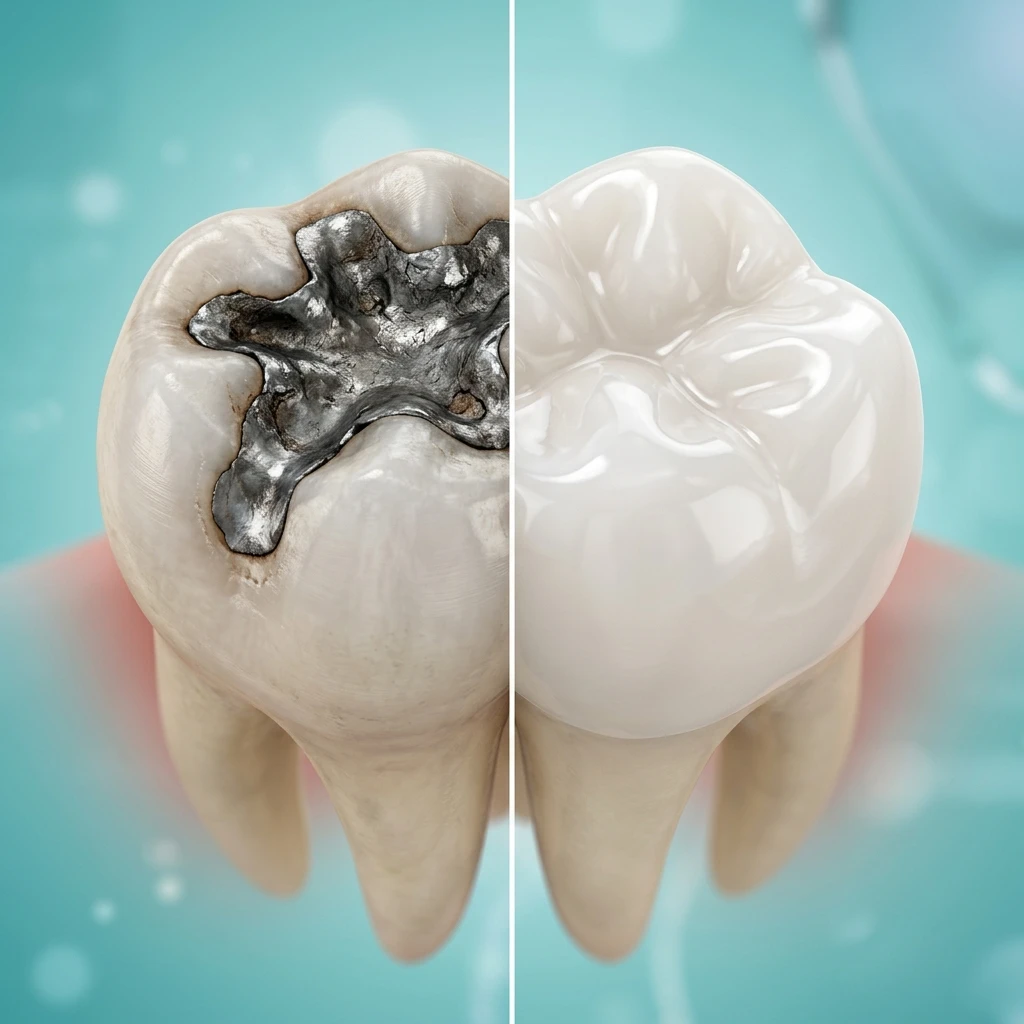
Understanding Dental Fillings
If your dentist has mentioned a cavity, you've probably heard the word "filling" more than once. But what exactly is a dental filling, and why do you need one?
A dental filling is a restorative treatment used to repair a tooth that's been damaged by decay. When a cavity forms, it means the tooth structure has been compromised by bacteria and decay. A filling restores the tooth by removing the decayed portion and filling the space with a biocompatible material. This stops the decay from spreading and restores the tooth's functionality and appearance.
Think of it like patching a hole in a wall — you remove the damaged section and fill it with a new material that matches the surrounding structure. At Krishna Dental in Gudivada, we use the latest filling materials to ensure your repair looks natural, lasts long, and protects your tooth for years to come.
Types of Dental Fillings
Not all fillings are created equal. Different materials offer different benefits, and your dentist will recommend the best option based on the size of the cavity, its location, your bite force, and your budget. Let's explore the main types available at our clinic in Gudivada:
1. Composite Resin Fillings
Composite resin is a tooth-coloured plastic material that bonds directly to your tooth. It's one of the most popular choices today, and for good reason.
- Appearance: Matches your natural tooth colour perfectly, making it virtually invisible.
- Durability: Lasts 5–10 years with good care, depending on the size of the filling.
- Strength: Strong enough for most cavities, though very large restorations might need a crown.
- Cost: More expensive than amalgam, but the aesthetic advantage is worth it for most patients in Krishna district.
Composite fillings require a dry field during placement, so they're best for cavities that aren't too deep or in areas where keeping them dry is easy. If you're in Gudivada and want a filling that nobody will notice, composite is typically the best choice.
2. Amalgam Fillings
Amalgam is an alloy made from mercury, silver, tin, and copper. Despite some concerns over the decades, they remain a safe, effective, and durable option.
- Appearance: Silver or grey coloured — visibly different from your tooth.
- Durability: Extremely long-lasting, often 10–20 years or more.
- Strength: Excellent for large cavities and high-pressure areas like molars.
- Cost: The most affordable filling option.
Many patients in Gudivada still prefer amalgam for back teeth because of its strength and longevity. However, if the cavity is visible when you smile, you might prefer composite for cosmetic reasons.
3. Ceramic and Porcelain Fillings
These are custom-made restorations, typically used for larger cavities or as an alternative to traditional fillings.
- Appearance: Extremely natural-looking and stain-resistant.
- Durability: Can last 15–20 years with proper care.
- Strength: Very strong and biocompatible.
- Cost: More expensive than composite or amalgam.
Ceramic fillings are often recommended when a cavity is large or if you want the most aesthetic restoration. They're particularly popular among patients in Krishna district who want their fillings to be completely invisible.
4. Glass Ionomer Fillings
Glass ionomer is a mixture of acrylic resin and silicate glass. It's less common than composite or amalgam but has unique properties.
- Appearance: Tooth-coloured, though not as translucent as composite.
- Durability: 5–7 years, making it one of the less durable options.
- Special property: Releases fluoride, which can help prevent future decay.
- Cost: Mid-range pricing.
Glass ionomer is often used for children's fillings or for cavities at the gum line, where its fluoride-releasing property is beneficial.
When Do You Need a Filling?
Not every dental issue requires a filling. Your dentist will recommend one if:
- A cavity is detected on X-rays or visual examination.
- A tooth has a fracture or chip that affects the interior.
- Decay has progressed beyond a certain point but the tooth can still be saved.
- You have a cracked tooth causing sensitivity or pain.
If you notice sensitivity, pain, or discoloration in your teeth, schedule an appointment with Krishna Dental on Eluru Road in Gudivada. Early detection means simpler, faster treatment and lower costs.
The Filling Procedure: Step by Step
If you've never had a filling, knowing what to expect can ease your anxiety. Here's how we do it at our Gudivada clinic:
Step 1: Diagnosis and Preparation
Your dentist will examine the cavity and take digital X-rays to assess its size and depth. Local anaesthesia is then applied to numb the area. You'll feel pressure but no pain.
Step 2: Isolation
For composite fillings, your dentist may isolate the tooth with a rubber dam to keep it dry during the procedure. For amalgam, this isn't always necessary.
Step 3: Decay Removal
Using a dental drill (handpiece), your dentist removes all decayed material. You'll hear a whirring sound and feel vibration, but with proper anaesthesia, there's no pain — just pressure.
Step 4: Cleaning and Conditioning
The cavity is thoroughly cleaned and dried. For composite fillings, a bonding agent is applied to help the filling adhere to your tooth structure.
Step 5: Filling Placement
The filling material is placed in layers. For composite fillings, each layer is hardened with a special blue light. Amalgam is packed and condensed to ensure no voids remain.
Step 6: Shaping and Polishing
Once the filling is hardened, your dentist shapes and polishes it to match your bite and the contour of your tooth. You may need to bite down on articulating paper to ensure the filling doesn't interfere with your bite.
The entire procedure usually takes 20 to 30 minutes for a simple filling. At Krishna Dental, we prioritize your comfort throughout — let us know if you need a break or have concerns.
Pain During the Procedure? Modern dental anaesthesia is highly effective. You should feel no pain, only pressure. If you do feel discomfort, tell your dentist immediately — they can apply more anaesthetic.
Aftercare and Recovery
Once your filling is complete, aftercare is simple but important to ensure your restoration lasts as long as possible.
Immediately After the Procedure
- Numbness: Your mouth will feel numb for 2–4 hours. Avoid eating or drinking until the numbness wears off to prevent biting your cheek or tongue.
- Sensitivity: Mild sensitivity to hot, cold, or pressure is normal for the first 24 hours.
- Bite: If the filling feels high or uncomfortable, contact us. We can adjust it easily.
First Week
- Avoid hard, sticky, or very hot foods.
- Chew on the opposite side of your mouth if possible.
- Stick to soft foods like soup, yoghurt, mashed potatoes, and smoothies.
- Continue normal brushing and flossing, but be gentle around the filling.
Long-Term Care
- Brush twice daily with fluoride toothpaste.
- Floss daily to prevent decay between teeth and around the filling.
- Limit sugary foods and drinks that feed decay-causing bacteria.
- Avoid teeth grinding by using a night guard if needed.
- See your dentist every 6 months for check-ups and professional cleanings.
At Krishna Dental in Gudivada, we recommend regular check-ups to monitor your fillings and catch any new cavities early. Prevention is always easier and more affordable than treatment.
How Long Do Fillings Last?
The lifespan of your filling depends on the material used, the size of the filling, your bite force, and your oral hygiene habits.
- Composite: 5–10 years
- Amalgam: 10–20+ years
- Ceramic: 15–20 years
- Glass ionomer: 5–7 years
These are averages. Some fillings last longer, while others may need replacement sooner if you grind your teeth, have a strong bite, or don't maintain good oral hygiene.
When Should You Replace Old Fillings?
Fillings don't always need to be replaced just because they've lasted a long time. However, replacement becomes necessary when:
- The filling is chipped, cracked, or broken.
- Decay forms around the edges of the filling (secondary decay).
- The filling is leaking, allowing bacteria underneath.
- The filling has receded, exposing the edges.
- You experience pain or sensitivity around the filling.
During your regular check-ups at Krishna Dental, we assess the condition of all your fillings. If we notice any issues, we'll discuss replacement options with you.
Composite vs. Amalgam: The Debate
Patients often ask us: which is better, composite or amalgam? The truth is, both are safe and effective. The choice depends on your priorities and situation.
Choose Composite If:
- The cavity is visible when you smile or talk.
- You want a natural-looking restoration.
- You prefer to avoid metals in your mouth.
- You have a smaller to medium-sized cavity.
Choose Amalgam If:
- You want maximum durability and longevity.
- The cavity is large or in a high-pressure area (like a molar).
- Cost is a significant factor.
- The cavity is not visible.
Many patients in Krishna district opt for composite on front teeth and amalgam on back molars — it's a practical compromise that balances aesthetics and durability.
Mercury Safety: Amalgam fillings contain mercury, but decades of research confirm they're safe. The mercury is bound within the alloy and doesn't leach into your body. If you're still concerned, composite is an excellent alternative.
Cost of Fillings in Gudivada
Filling costs vary based on the type of material and the complexity of the cavity. At Krishna Multispeciality Dental Clinic, we maintain transparent pricing with no hidden charges.
Generally, you can expect:
- Composite fillings: Mid-range cost, excellent value for aesthetics.
- Amalgam fillings: Most affordable option, ideal for large cavities.
- Ceramic fillings: Premium cost, maximum longevity and aesthetics.
Most dental insurance plans cover a portion of filling costs. We recommend calling ahead to confirm what your plan covers. When you visit Krishna Dental on Eluru Road, we'll provide a detailed estimate before any treatment begins.
Can Fillings Be Prevented?
The best filling is the one you never need. Here's how to prevent cavities and reduce your risk of needing a filling:
- Brush twice daily with fluoride toothpaste for at least two minutes.
- Floss daily to remove food and plaque between teeth.
- Limit sugary and acidic foods that feed cavity-causing bacteria or erode enamel.
- Drink plenty of water to keep your mouth moist and wash away food debris.
- Use mouthwash to reduce bacteria count.
- Visit your dentist every 6 months for professional cleaning and early detection.
- Ask about dental sealants for your back teeth — these are thin coatings that prevent decay.
At Krishna Dental in Gudivada, we believe prevention is better than cure. Our team educates patients on proper oral hygiene and preventive strategies during every visit.