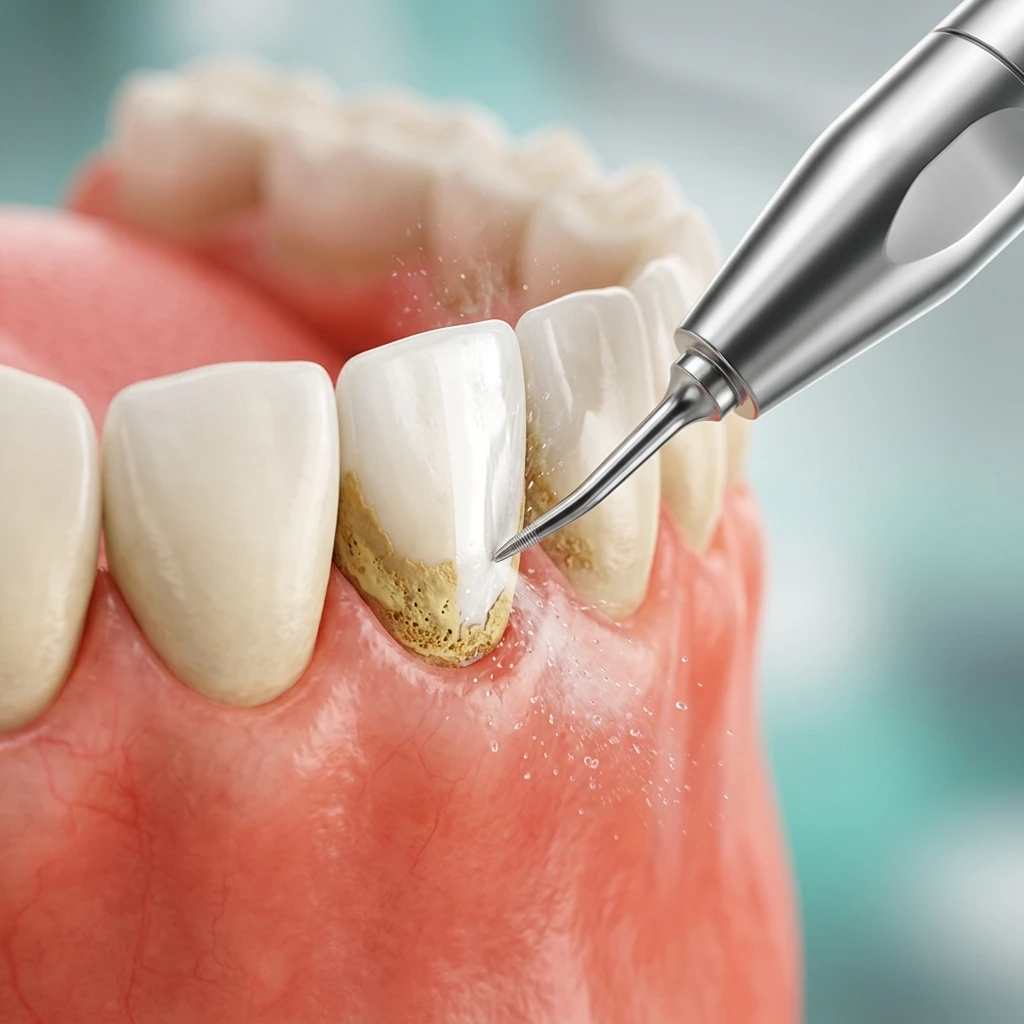
Why Professional Cleaning Matters — Even If You Brush Twice Daily
You brush your teeth every morning and night. You floss (most days). So why do you still need to visit a dentist in Gudivada for professional cleaning? The answer is simple: even the most diligent home care routine can't reach what a dental professional can.
Professional dental cleaning, also called prophylaxis, removes tartar buildup that forms below the gumline where your toothbrush can't reach. Tartar is hardened plaque that harbours bacteria, contributes to gum disease, and leads to tooth loss if left untreated. Your dentist at Krishna Multispeciality Dental Clinic has specialized instruments and training to remove this buildup safely and thoroughly — something no at-home routine can replicate.
Beyond removing tartar, professional cleaning allows your dentist to catch early signs of decay, gum disease, and even oral cancer before they become serious problems. This preventive approach saves you money, pain, and teeth in the long run. In Krishna district and across Andhra Pradesh, thousands of patients benefit from regular professional cleanings that keep their smiles healthy for life.
Key fact: The American Dental Association recommends professional cleaning every 6 months for most people, though some (especially those with gum disease) may need it every 3-4 months.
The Professional Cleaning Process: Step by Step
When you come in for a cleaning at our clinic in Gudivada, here's exactly what happens during your appointment:
Step 1: Initial Examination
Your hygienist or dentist begins by examining your mouth visually and with a small mirror. They look for signs of gum inflammation, decay, or other concerns. This quick assessment helps them identify areas needing extra attention during the cleaning.
Step 2: Scaling with Hand Instruments
Using a scaler (a thin metal instrument), the hygienist carefully removes tartar from above and below the gumline. You may hear a scraping sound and feel slight vibration — this is completely normal and painless when done by a skilled professional. The scaler gets into the spaces between teeth where a toothbrush bristles simply cannot.
Step 3: Ultrasonic Scaling (When Needed)
For heavier tartar buildup, many dentists use ultrasonic scalers. These devices vibrate at high frequency to break up tartar more efficiently than hand scaling alone. They also emit a fine water spray that rinses away debris. If you have sensitive teeth, the vibration feels different but isn't painful — and it's actually faster than hand scaling.
Step 4: Professional Polishing
After all tartar is removed, your hygienist uses a rotary polisher with a fine, gritty paste to polish your teeth. This removes surface stains from coffee, tea, or red wine and leaves your teeth smooth and shiny. The polishing paste tastes minty and feels refreshing as it buffs away months of staining.
Step 5: Flossing and Final Rinse
Professional floss is thinner than typical dental floss and reaches deep between teeth. Your hygienist will floss between every tooth to remove any remaining debris and check for gaps. A final rinse with water or fluoride solution leaves your mouth feeling completely clean.
Step 6: Fluoride Treatment (Optional)
Many dental offices in Gudivada offer a fluoride treatment after cleaning. This strengthens enamel and helps prevent decay in the weeks following your appointment. The fluoride comes as a gel, foam, or liquid and only takes a few minutes to apply.
Ultrasonic vs. Hand Scaling: What's the Difference?
You might wonder if one scaling method is better than the other. The truth is that both are effective, and many dentists use a combination of both techniques.
Hand scaling uses manual control and a sharp instrument to physically remove tartar. It requires skill and experience but allows your dentist to feel exactly what they're removing and work very precisely. This method is gentler on sensitive gums and takes a bit longer.
Ultrasonic scaling uses rapid vibrations to break up tartar more quickly and efficiently. It's especially useful for heavy tartar buildup and works faster overall. The downside is that some patients with very sensitive teeth find the vibration uncomfortable, though it's not painful. At Krishna Dental in Gudivada, our hygienists are trained to use whichever method suits your comfort level and your specific needs.
Does Professional Cleaning Hurt?
One of the most common questions we hear at our Krishna district practice is: "Will it hurt?" The honest answer is: it shouldn't. A professional cleaning performed by a trained hygienist is virtually painless for most people. What you might experience is:
- Vibration sensation from ultrasonic scalers (especially if heavy buildup is present)
- Minor discomfort if your gums are inflamed or you have active gum disease
- Water spray sensation during rinsing, which some find refreshing
- Slight pressure from the hygienist's instruments, which feels more like a tickle than pain
If you have sensitive teeth or anxious about the cleaning, let your dentist know before your appointment. We can apply topical anesthetic to your gums or take extra precautions to make you comfortable. Many patients find that once they experience one professional cleaning, they realize it's nothing to fear.
How Often Do You Really Need Professional Cleaning?
The standard recommendation is twice per year — every 6 months. However, your specific needs depend on several factors:
- Excellent oral hygiene + healthy gums: Once yearly may be sufficient
- Average oral hygiene: Twice yearly is ideal
- Gum disease or heavy tartar buildup: Every 3-4 months
- Smoking habit: More frequent cleanings (every 3-4 months)
- Diabetes or immune compromise: More frequent (every 3-4 months)
- Orthodontic treatment (braces): Before and after adjustments
During your visit to Krishna Dental in Gudivada, our team will assess your oral health and recommend the ideal cleaning schedule for your individual situation.
Deep Cleaning vs. Regular Cleaning: When Do You Need It?
Regular professional cleaning removes tartar from above the gumline and just below it. It's preventive care for people with healthy gums. Deep cleaning (also called scaling and root planing) is different — it's a therapeutic treatment for periodontal disease.
Deep cleaning targets tartar buildup below the gumline and on the root surface of teeth. It's needed when gum pockets are deeper than 3-4mm (measured by your dentist), indicating gum disease. Deep cleaning typically requires local anaesthesia and multiple appointments, as it addresses one quadrant of the mouth at a time.
If your dentist in Gudivada recommends deep cleaning instead of regular cleaning, don't be alarmed — it simply means your gums need therapeutic attention. Addressing it now prevents tooth loss and more expensive treatments later.
What to Do After Your Professional Cleaning
Your cleaning is done, and your mouth feels amazing. Now what? Here's how to care for your teeth in the hours and days following your appointment:
- Wait 30 minutes before eating or drinking if you had fluoride treatment (allows the fluoride to fully absorb)
- Avoid hard or sticky foods for the rest of the day to prevent damage to freshly cleaned teeth
- Be gentle when flossing for the next few days if your gums felt tender
- Continue your regular brushing and flossing routine — don't skip it
- Rinse with salt water if your gums are slightly sore (mix 1/2 teaspoon salt in warm water)
- Avoid very hot or very cold foods for 24 hours if your teeth feel sensitive
The sensitivity you might feel after cleaning is temporary and usually goes away within a few days as your gums heal. Your teeth aren't damaged — you're simply noticing teeth that have been cleaned of buildup.
Signs You're Overdue for a Cleaning
If it's been longer than 6 months since your last professional cleaning, watch for these signs that you should schedule one immediately:
- Your gums bleed when you brush or floss
- Your breath seems bad no matter how much you brush
- Your gums look red, swollen, or puffy
- You notice tartar buildup (yellow or brown deposits) on your teeth
- Your teeth look dull or stained despite good brushing habits
- You have a family history of gum disease or tooth loss
- You smoke or use tobacco products
These are your mouth's way of telling you it needs professional attention. Don't wait — call Krishna Dental in Gudivada to book your cleaning appointment.
Cost of Dental Cleaning in Gudivada
Professional cleaning is one of the most affordable dental treatments available, which is exactly why it's such a smart investment. At Krishna Multispeciality Dental Clinic in Gudivada, we offer transparent pricing with no hidden fees.
Typical costs for routine professional cleaning range from Rs. 500 to Rs. 1,500 depending on the amount of tartar buildup and whether additional treatments are needed. Deep cleaning, if required, costs more because it involves more time, multiple appointments, and often local anaesthesia. Many dental insurance plans cover 100% of preventive cleanings, and we're happy to file claims on your behalf.
When you consider that a single cavity filling costs Rs. 2,000-4,000 and a root canal costs Rs. 10,000-20,000, spending on regular cleanings is clearly the smart financial choice. Prevention is always cheaper than treatment.
Your Path to a Healthier Smile Starts Here
Professional dental cleaning isn't just about removing tartar and making your smile look brighter — it's about protecting your long-term oral health. Regular cleanings are preventive medicine for your teeth and gums, catching problems early before they become serious and expensive.
In Gudivada and throughout Krishna district, patients trust Krishna Dental Team to provide comfortable, thorough professional cleanings in a modern, welcoming environment. Our hygienists are trained in the latest techniques, and our dentists use state-of-the-art equipment to ensure your cleaning is both effective and pleasant.
Whether it's been 6 months or 6 years since your last professional cleaning, there's no better time than now to schedule your appointment. Your smile — and your future self — will thank you.