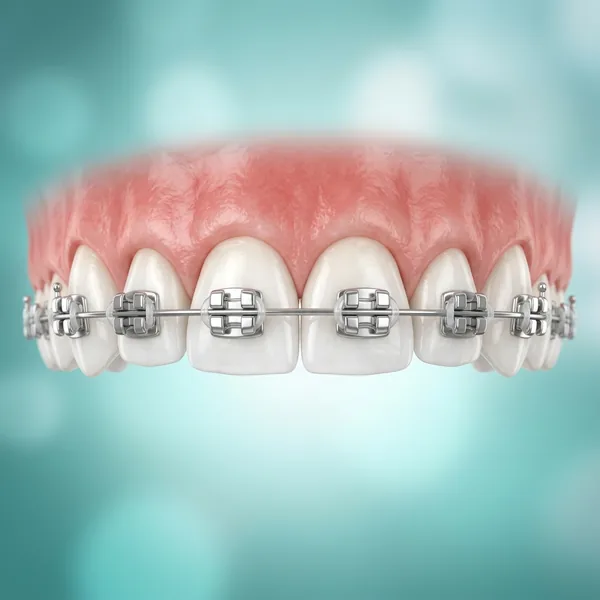
What Do Braces Do?
Braces are orthodontic devices designed to straighten teeth and correct bite problems. They work by applying constant, gentle pressure to move teeth into their ideal positions over time.
But braces do more than just improve your smile's appearance. They:
- Correct misaligned teeth that can lead to uneven wear and damage.
- Fix bite problems that can cause jaw pain and difficulty chewing.
- Reduce the risk of tooth decay and gum disease by making teeth easier to clean.
- Improve overall oral health and function.
- Boost confidence and self-esteem.
At Krishna Dental in Gudivada, our orthodontic specialists assess each patient individually to determine whether braces are necessary and which type would be most effective for your unique situation.
How Do Braces Work?
Braces move teeth using a simple principle: constant pressure applied over time causes the bone around the tooth roots to remodel, allowing teeth to shift into new positions.
Here's the process in brief:
- Brackets and wire: Brackets are bonded to each tooth and connected by a wire. The wire applies pressure to the brackets, which in turn applies pressure to the teeth.
- Periodic adjustments: Every 4–6 weeks, you visit your orthodontist for adjustments. The wire is either tightened or replaced with a thicker wire to continue moving the teeth.
- Bone remodelling: The pressure stimulates bone to dissolve on the side of the tooth where pressure is applied and new bone to form on the opposite side, effectively moving the tooth.
- Retention: Once your teeth have reached their ideal positions, a retainer keeps them in place while the bone fully hardens in its new position.
The process takes time — typically 18 to 24 months for most patients in Krishna district — but the results are permanent if you follow your orthodontist's aftercare instructions.
Types of Braces Available in Gudivada
Modern orthodontics offers several options, each with its own advantages. At Krishna Dental, we offer a range of braces to suit different needs and preferences:
Traditional Metal Braces
Metal braces are the most common and most affordable option. They consist of stainless steel brackets and wires.
- Pros: Affordable, durable, effective for all types of corrections, can include coloured bands.
- Cons: Visible, can cause minor discomfort initially, require more frequent adjustments.
- Best for: Patients who want the most economical option or who need complex corrections.
Ceramic Braces
Ceramic braces have tooth-coloured brackets that blend with your teeth, making them less noticeable than metal braces.
- Pros: Aesthetic, nearly invisible, effective for all corrections.
- Cons: More expensive than metal, slightly more fragile, can stain if not kept clean.
- Best for: Adults and teens concerned about appearance.
Self-Ligating Braces
Self-ligating braces use a special clip mechanism instead of rubber bands to hold the wire in place. This reduces friction and allows teeth to move more freely.
- Pros: Faster treatment times, fewer adjustments, more comfortable, easier to clean.
- Cons: More expensive, fewer colour options.
- Best for: Patients wanting faster results and maximum comfort.
Clear Aligners (Invisible Braces)
Clear aligners are custom-made plastic trays that gradually move your teeth. They're nearly invisible and removable, making them increasingly popular.
- Pros: Nearly invisible, removable (easy cleaning and eating), comfortable, no dietary restrictions.
- Cons: Most expensive option, not suitable for severe corrections, requires discipline to wear consistently.
- Best for: Adults with mild to moderate misalignment who prioritize aesthetics and convenience.
During your consultation at Krishna Dental in Gudivada, we'll discuss all options and help you choose the one that best fits your needs, goals, and budget.
Who Needs Braces?
Your orthodontist might recommend braces if you have:
- Crowded teeth with insufficient space.
- Gaps between teeth.
- Overbite (upper teeth protrude beyond lower teeth).
- Underbite (lower teeth protrude beyond upper teeth).
- Crossbite (some upper teeth bite inside lower teeth).
- Open bite (teeth don't overlap when you bite down).
- Misaligned jaw.
The best way to determine if you need braces is to visit an orthodontist for a comprehensive evaluation. At Krishna Dental, we use digital imaging and advanced diagnostic tools to assess your situation and recommend the best treatment plan.
Braces for Children vs. Adults
Both children and adults benefit from braces, but there are some differences in treatment:
Children and Teens
Orthodontic treatment is often started during childhood or early adolescence because:
- The jaw is still growing, allowing for more effective corrections.
- Treatment times tend to be shorter (18–24 months).
- Early intervention can prevent more serious problems later.
- Children are often more adaptable to treatment.
Adults
It's never too late for braces. Adults seeking orthodontic treatment:
- Have fully developed jaws, requiring a slightly different approach.
- May need longer treatment times, though options like self-ligating braces and clear aligners can expedite results.
- Often prioritize aesthetic options like ceramic or clear aligners.
- Should be aware that gum disease must be controlled before braces can be placed.
At Krishna Dental in Gudivada, we treat patients of all ages. Whether you're a teenager or an adult, we have solutions to give you the smile you've always wanted.
Is It Ever Too Late? No! Many adults in Gudivada and Krishna district are seeking orthodontic treatment at 30, 40, 50, and beyond. Modern technology makes adult orthodontics faster and more comfortable than ever.
Your First Orthodontic Visit
Don't worry if you're nervous about your first appointment. Here's what to expect:
1. Consultation and Assessment
Your orthodontist will review your medical and dental history, discuss your concerns, and explain what you hope to achieve.
2. Clinical Examination
A thorough examination of your teeth, bite, and jaw follows. We assess crowding, spacing, bite alignment, and any other relevant factors.
3. Imaging
Digital X-rays, photos, and sometimes 3D scans are taken to accurately diagnose your condition and plan treatment.
4. Treatment Plan
Your orthodontist presents a customized treatment plan including the recommended type of braces, expected duration, and cost breakdown.
5. Decision and Next Steps
Once you decide to proceed, your orthodontist schedules the placement appointment and explains pre-placement instructions.
The entire initial consultation typically takes 30–60 minutes. Come prepared to discuss your concerns and goals so we can provide the best recommendations.
How Long Does Braces Treatment Take?
Treatment duration varies based on the severity of your misalignment and the type of braces used:
- Mild misalignment: 12–18 months
- Moderate misalignment: 18–24 months
- Severe misalignment: 24–36 months or longer
Self-ligating braces and clear aligners can sometimes reduce treatment time by 10–20% compared to traditional metal braces. However, the most important factor is wearing your braces consistently and following your orthodontist's instructions.
At Krishna Dental in Gudivada, we work efficiently to achieve results in the shortest reasonable timeframe while ensuring quality outcomes.
Eating with Braces: What You Can and Can't Eat
One of the most common concerns about braces is whether you'll have to give up your favourite foods. The short answer: mostly no, but with some restrictions.
Foods to Avoid with Braces
- Hard foods: Nuts, hard candy, caramel, ice, hard tacos.
- Sticky foods: Gum, taffy, molasses, caramel, peanut butter.
- Crunchy foods: Raw carrots, apples (unless cut into small pieces), popcorn, chips.
- Foods that require tearing: Meat on the bone, chicken wings.
- Sugary foods and drinks: These increase cavity risk, which is already higher with braces.
Foods You Can Enjoy
- Soft fruits (bananas, berries, peaches).
- Soft vegetables (cooked carrots, peas, corn).
- Soft meats (fish, chicken, ground meats).
- Dairy products (yoghurt, cheese, milk).
- Grains (soft bread, pasta, rice).
- Cooked vegetables and soft soups.
The key is cutting foods into bite-sized pieces and chewing carefully. Most importantly, avoid foods that could damage your braces, as repairs can delay your treatment.
Oral Hygiene with Braces
Maintaining excellent oral hygiene is crucial when you have braces, as food particles easily get trapped around brackets and wires.
Brushing Technique
- Brush at least three times daily — morning, after meals/snacks, and before bed.
- Use a soft-bristled toothbrush at a 45-degree angle to the gum line.
- Brush gently above and below each bracket.
- Consider an electric toothbrush for more effective cleaning.
- Use fluoride toothpaste to strengthen enamel.
Flossing
- Floss daily using floss threaders to navigate around wires.
- Water flossers are also effective and easier to use with braces.
Additional Tips
- Use antimicrobial mouthwash to reduce bacteria.
- Visit your dentist every 6 months for professional cleaning.
- Avoid sugary foods and drinks that feed cavity-causing bacteria.
Good oral hygiene during braces treatment prevents cavities, gum disease, and other complications that could extend your treatment time.
Braces Cost in Gudivada
The cost of braces varies based on the type of braces and the complexity of your case:
- Traditional metal braces: Most affordable option.
- Ceramic braces: 20–30% more expensive than metal.
- Self-ligating braces: 15–25% more expensive than metal.
- Clear aligners: Often the most expensive option.
At Krishna Dental in Gudivada, we offer transparent pricing with no hidden charges. We also provide flexible payment plans to make treatment accessible. During your consultation, we'll provide a detailed cost breakdown for your specific needs. Our approach to honest, transparent care is reflected in our patient feedback — Krishna Dental holds a 5.0 ★ rating from 67 verified Google reviews.
Retainers: Keeping Your Smile Straight
Once your braces come off, the journey isn't quite over. Your teeth have a natural tendency to shift back to their original positions, which is why retainers are essential.
Types of Retainers
- Fixed retainers: A thin wire bonded to the back of your teeth, permanently in place.
- Removable retainers: Custom-made clear trays you wear nightly.
- Combination: Many patients use both for maximum stability.
Wearing Your Retainer
- Wear removable retainers nightly for at least 1–2 years after braces are removed.
- Some patients need to wear them indefinitely.
- Clean your retainer daily with a soft brush and mild soap.
Retainers are crucial for maintaining the results of your orthodontic treatment. Skipping retainer wear is the number one reason teeth shift back after braces.